What Is a Creator Business?
A creator business is a business built around your knowledge, skills, or content. Instead of selling physical products or services by the hour, you package what you know into digital products, courses, and resources that can be sold infinitely.
The advantage: you're not trading time for money. You create something once and earn from it repeatedly.
Step 1: Find Your Niche
Your niche is the intersection of:
- What you know: Your skills, experience, and knowledge
- What people want: Problems people are willing to pay to solve
- What you enjoy: Topics you can create content about consistently
How to Find Your Niche
- List your skills: What are you good at? What do people ask you about?
- Identify problems: What problems can you solve that people pay for?
- Check demand: Are people searching for solutions in this area?
- Assess competition: Is there room for you, or is the market saturated?
Examples of Profitable Niches
- Fitness: Home workouts, strength training, nutrition, yoga
- Business: Marketing, sales, productivity, entrepreneurship
- Creative: Photography, design, video editing, music production
- Personal development: Productivity, habits, goal setting
- Finance: Budgeting, investing, side hustles
Looking for a niche with a done-for-you product? Kitzio Money Kits come with product ideas in fitness, business, social media, and more.
Step 2: Build Your Audience
Before you can sell, you need an audience. Here's how to build one:
Choose Your Platform
Pick 1–2 platforms where your target audience spends time:
- Instagram: Visual content, lifestyle, fitness, beauty
- TikTok: Short-form video, trends, entertainment
- YouTube: Long-form video, tutorials, education
- Twitter/X: Text content, business, tech, news
- LinkedIn: Professional content, B2B, career
- Blog/Newsletter: Long-form written content
Create Valuable Content
Your content should:
- Solve problems: Help your audience with specific challenges.
- Be consistent: Post regularly to stay top of mind.
- Show your expertise: Demonstrate that you know what you're talking about.
- Build trust: Be authentic and genuine.
Capture Emails
Don't rely solely on social media algorithms. Capture emails from day one:
- Offer a free resource (lead magnet) in exchange for an email.
- Add an email capture form to your website or storefront.
- Email your list regularly with valuable content.
Kitzio storefronts include built-in email capture — every visitor can join your list.
Step 3: Create Your First Product
Once you have an audience (even a small one), create your first product:
Product Ideas for Beginners
- Ebook: Package your knowledge into a 20–50 page guide.
- Template: Create a Notion template, Excel spreadsheet, or Canva template.
- Mini-course: Record 3–5 short video lessons.
- Workbook: Create a structured PDF with exercises.
- Preset pack: If you're a photographer, sell Lightroom presets.
Keep It Simple
Your first product doesn't need to be perfect. It needs to be useful. Start with something you can create in a weekend, then improve based on feedback.
Kitzio's AI tools can help you generate product ideas and write sales copy.
Step 4: Set Up Your Storefront
You need a place to sell your product. Your options:
- All-in-one platform (recommended): Kitzio gives you a storefront, checkout, email, and analytics.
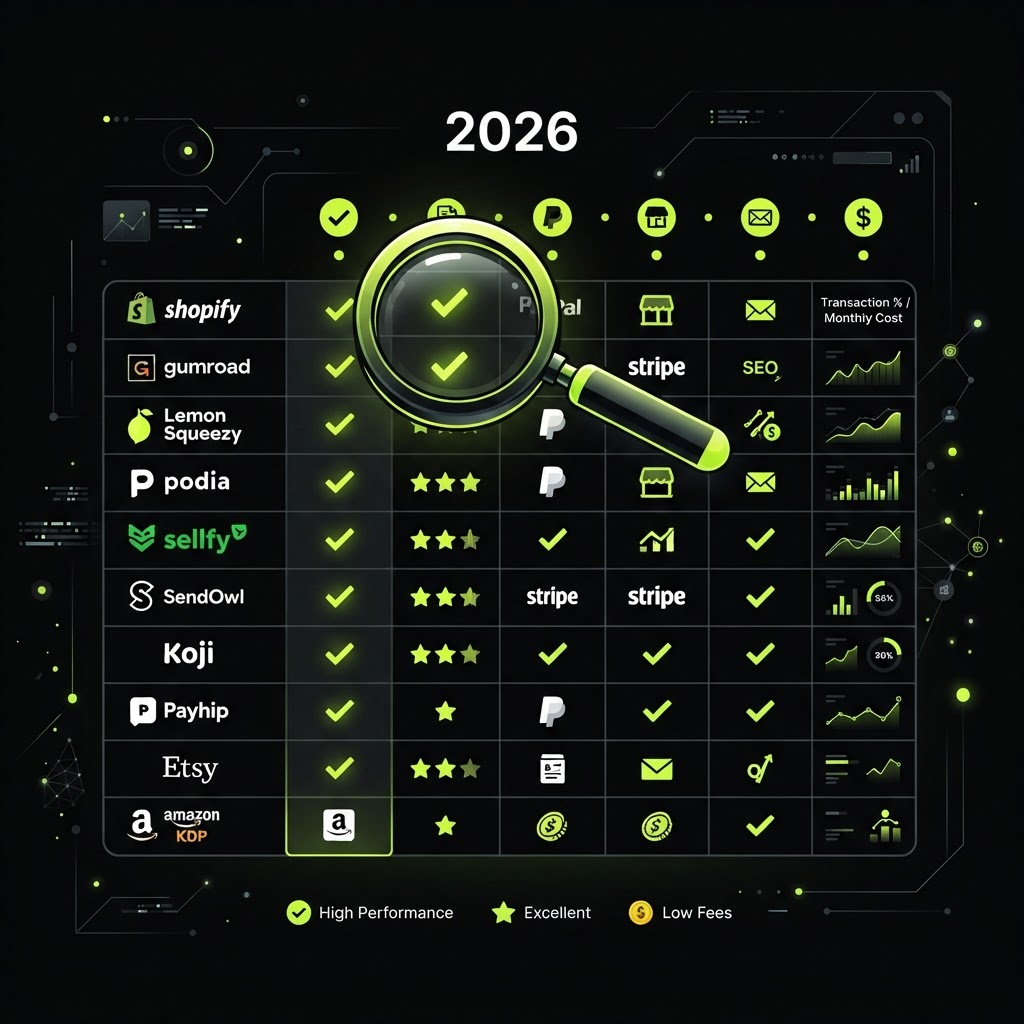
- Marketplace: Gumroad gives you a product page on their platform.
- Your own website: Requires more setup and technical knowledge.
For most creators, an all-in-one platform is the best balance of simplicity and control.
With Kitzio's AI Store Builder, you can build your storefront in minutes.
Step 5: Launch Your Product
Your product is created and your storefront is live. Now launch:
Launch Checklist
- Tell your audience: Post about your product on social media.
- Email your list: Send a launch email with a discount code.
- Offer a launch discount: 20–30% off for launch week.
- Set up an email sequence: Create a 3–5 email welcome sequence.
- Ask for reviews: After your first sales, ask for testimonials.
Kitzio includes email marketing, discount codes, and an affiliate program — all built in.
Step 6: Drive Traffic
Your storefront needs visitors to make sales:
- Social media: Share your store link in your bio and posts.
- Email list: Promote your products to your subscribers.
- Content marketing: Create content that attracts your target audience.
- Affiliates: Let others promote your products for a commission.
- SEO: Write blog posts that rank in search results.
When you publish your Kitzio storefront, it automatically appears in the Creator Directory — giving you free discovery.
Step 7: Track and Grow
Use analytics to understand what's working:
- Traffic: Where are your visitors coming from?
- Conversion rate: What percentage of visitors buy?
- Revenue: How much are you earning?
- Best sellers: Which products sell most?
Double down on what works and improve what doesn't.
Kitzio's analytics dashboard tracks all of this automatically.
The Creator Business Roadmap
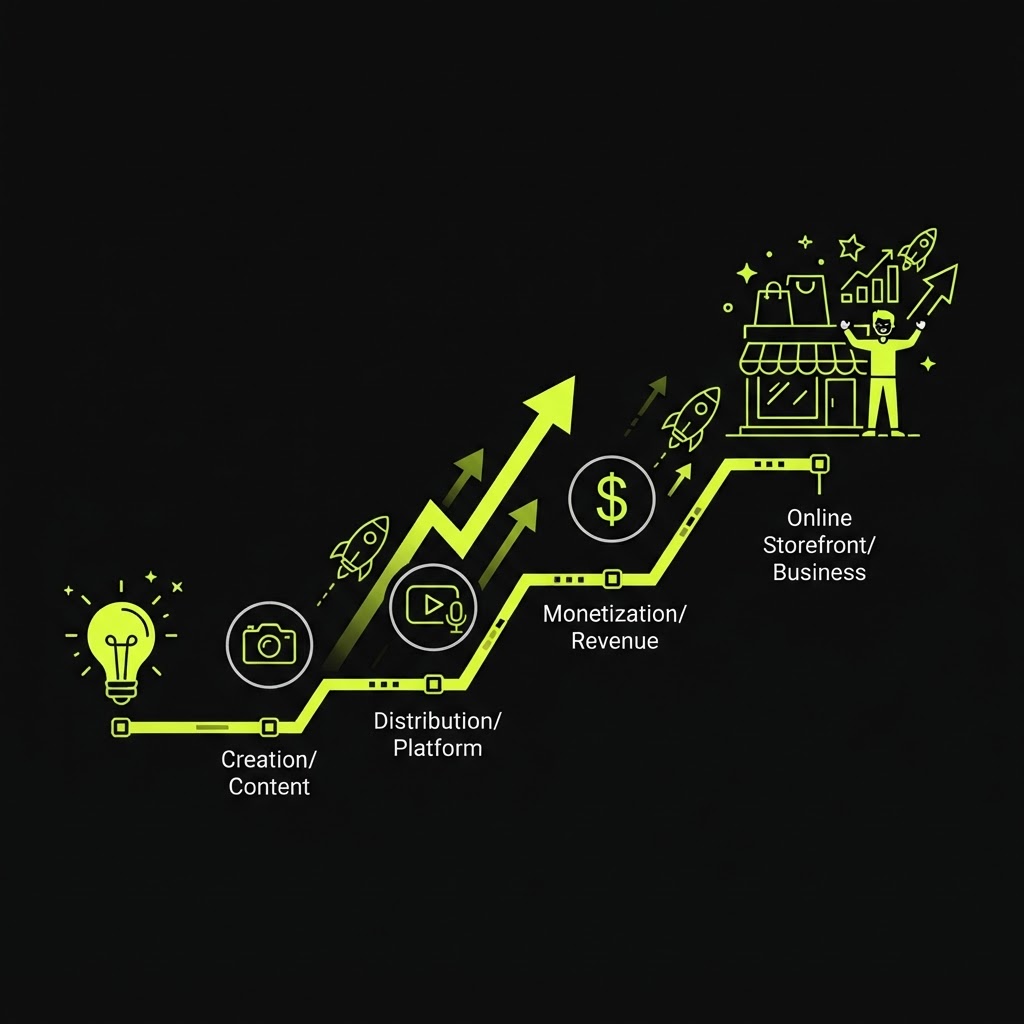
Here's a simple roadmap from zero to your first sale:
- Week 1: Choose your niche and create your first piece of content.
- Week 2: Start building your audience on 1–2 platforms.
- Week 3: Create your first digital product.
- Week 4: Set up your storefront and launch.
- Week 5: Promote your product and get your first sale.
- Week 6+: Track, improve, and scale.
Kitzio's 30-Day Launch Guarantee means if you don't launch your store or product within 30 days, we'll work with you until you do — or refund your first month.
Common Mistakes to Avoid
- Waiting for perfection: Your first product doesn't need to be perfect. Ship it and improve.
- No traffic plan: A storefront without traffic is a store with no customers.
- Ignoring email: Email is one of the highest-converting channels. Build your list from day one.
- Trying to do everything: Start with one product and one traffic source. Expand later.
- Underpricing: Don't undervalue your work. If you solve a real problem, charge for it.
Ready to Start Your Creator Business?
The fastest way to start is with an all-in-one platform that handles your storefront, products, email, and analytics.
Start free on Kitzio and launch your creator business today. No credit card required.
FAQ
How much does it cost to start a creator business?
With Kitzio's Free plan, you can start for $0/month (with a 5% platform fee per sale). You can sell up to 3 PDF products and add 1 Money Kit.
How long does it take to start earning?
It varies. Some creators earn in their first month. For most, it takes 3–6 months of consistent content creation and audience building to see regular sales.
Do I need a big audience to start?
No. You can start with a small audience. Even 100 engaged followers can generate your first sales. Focus on building trust, not just numbers.
What should I sell first?
Start with something you can create quickly — an ebook, template, or mini-course. The goal is to get your first product live and your first sale, then expand from there.